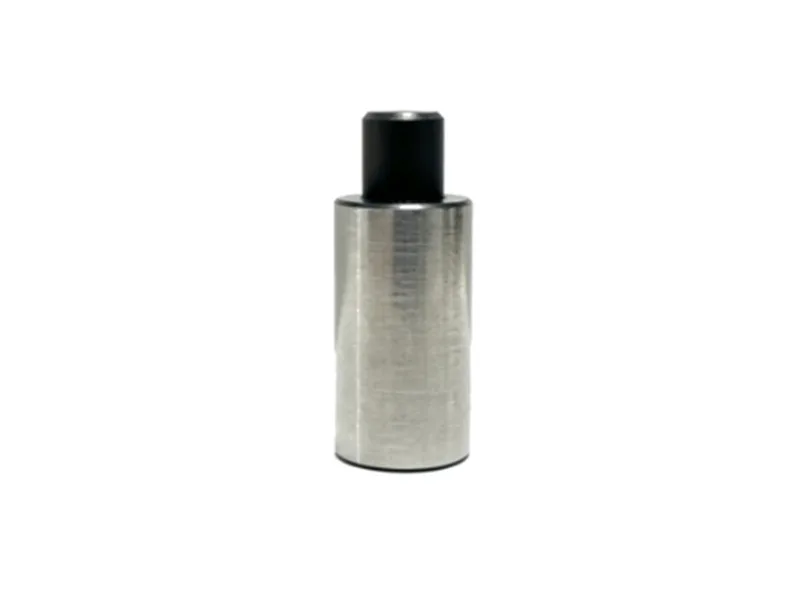
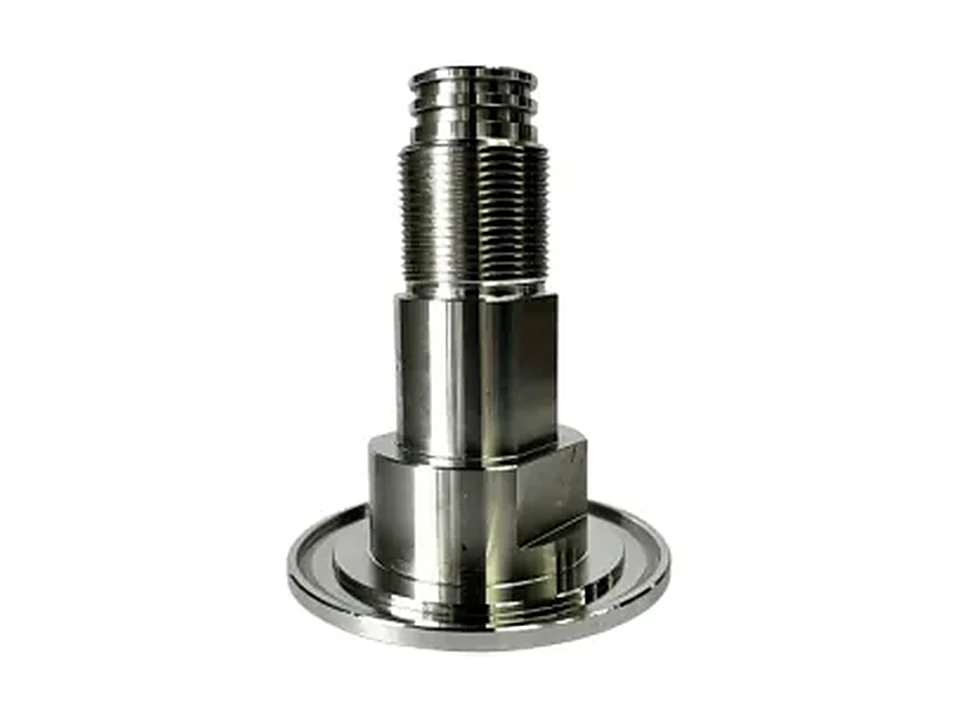

Fastener Manufacturing Process
Production process: cut → head → thread roll → heat treat → finish → inspect and pack, with process controls below; plus the five-gate criteria and measured data for replacing machining with cold heading — the most direct cost-down route for volume rotationally-symmetric parts.
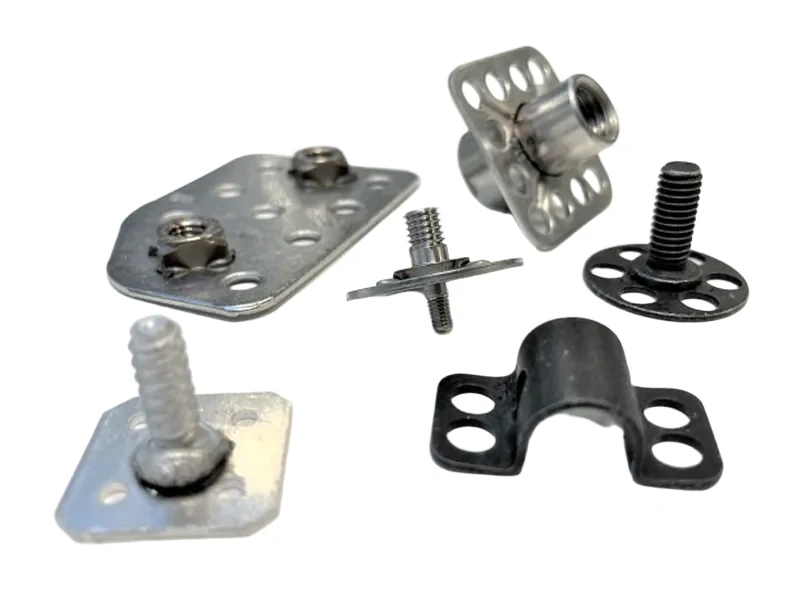
Process controls
- Heading: die life and first-article checks
- Heat treat: hardness and metallography sampling
- Finishing: coating thickness and salt spray per batch
- Shipment: AQL sampling with reports
Cold heading vs CNC: five dimensions
| Factor | Cold heading (forming) | CNC (cutting) |
|---|---|---|
| Material utilisation | High — only setup scrap | Low — chips on every part |
| Grain flow | Continuous along the contour | Cut by tools, forming weak planes |
| Strength (same material) | Clearly better (work hardening + continuous flow) | Yield/tensile reduced |
| Cycle time | Seconds per part — orders of magnitude faster | Slow |
| Upfront cost | Higher die cost, 6–12 h changeover | Minimal die cost, 2–4 h setup |
| Volume cost | Lower with volume | Suits first articles and small batches |
| Geometric freedom | Limited by forming envelope | Highest freedom |
Grain flow: cold-headed parts are stronger (measured)
| Size | Steel | Machined tensile kgf/mm² | Cold-headed tensile kgf/mm² | Gain |
|---|---|---|---|---|
| M8 | Steel 40 | 62 | 68 | ≈ +9.7% |
| M10 | Steel 35 | 56 | 60 | ≈ +7.1% |
| M12 | Steel 40X | 60 | 65 | ≈ +8.3% |
| M18 | Steel 35 | 52 | 57 | ≈ +9.6% |
| Source: Tensile comparison of machined vs cold-headed parts, same material and size. Source: internal process test records. | ||||
Five gates: decide by calculation, not habit
| Gate | Question | Criterion |
|---|---|---|
| Gate 1 · Deformation | Can the material take it? | Deformation degree q below material limit (low-carbon steel 60–70%; high-carbon only 20–30%) |
| Gate 2 · Blows | How many blows? | Free-upset ratio S=L/D: ≤2.5 one blow, ≤4.5 two, ≤6.5 three |
| Gate 3 · Shank buckling | Will the shank bend? | Solid-die shank length ≤8d; longer → open die or secondary machining |
| Gate 4 · Machine capability | Is the machine enough? | Check wire diameter, cut length and forming force — not just “head size” |
| Gate 5 · Wire quality | Does the wire qualify? | Incoming checks: Brinell hardness, tensile, elongation, reduction of area |
Extrusion deformation limits
| Mode | Area reduction per pass | Extrusion angle | Typical use |
|---|---|---|---|
| Open extrusion (billet pushed into a small-hole die) | ≤30% | ≤30° | Bolts, screws, stepped shafts |
| Closed (confined) extrusion | Up to 75% | Larger head-to-shank ratios | Nuts, sleeves, semi-tubular rivets |
Hybrid route: form by heading, finish by machining
- Forming by heading: keep grain flow and work-hardening gains — over 90% of material becomes part, not chips
- Precision by machining: finish-turn/grind only critical fits and GD&T features, shrinking allowances
- Typical chain (SUS630 / 17-4PH): solution-annealed wire → multi-station near-net heading → thread rolling → ageing → light finishing; ageing shrinks parts 0.04–0.06%, so precision machining comes after ageing
- Economics: machining time drops to a few features while utilisation and cycle time stay cold-heading-grade — the bigger the batch, the bigger the gain
Typical cases
- 6061 battery-pack lifting sleeve: full CNC from bar cuts aluminium grain flow, leaving weak points under cyclic stress; cold heading keeps flow continuous around flange and body with higher stress-fracture resistance — safety redundancy for a point carrying the whole pack
- VA/VE process change: forged→cold-headed project saved ¥0.75/unit internally, ¥375,000 over 500k pieces
Three contact tiers
Phones and mailbox are identical site-wide and match the structured data.
| Need | Contact | Reach |
|---|---|---|
| Technical · Engineering review | Mr. Zhang (Engineering & Sales Director) | +86 135-1036-9429 [email protected] |
| Sales · Quotes / MOQ / lead time | Ms. Fan (Sales Manager) | +86 135-6073-0094 [email protected] |
| Complaints & suggestions | Complaints & suggestions (reply within 24 h) | [email protected] |
FAQ
Cold heading or CNC?
Flanged rotational parts at volume suit heading (grain flow, cycle time, utilisation); complex geometry, small batches or many precision features go CNC or the hybrid route. Always pass the five gates first.
How to start a cost-down review?
Send the part drawing and annual volume; we return a process route and savings estimate within one working day. Small-batch samples can run in as fast as 1 day.
Need a spec check or 1-day sample?
Send us your drawing, spec or part code. We reply the same day on stock, MOQ, tiered pricing and lead time (1-day sampling for stock; volume 7–15 days).
Call directly: +86 135-1036-9429(Mr. Zhang (Engineering & Sales Director)) · +86 135-6073-0094(Ms. Fan (Sales Manager))