
Fastener Surface Treatment
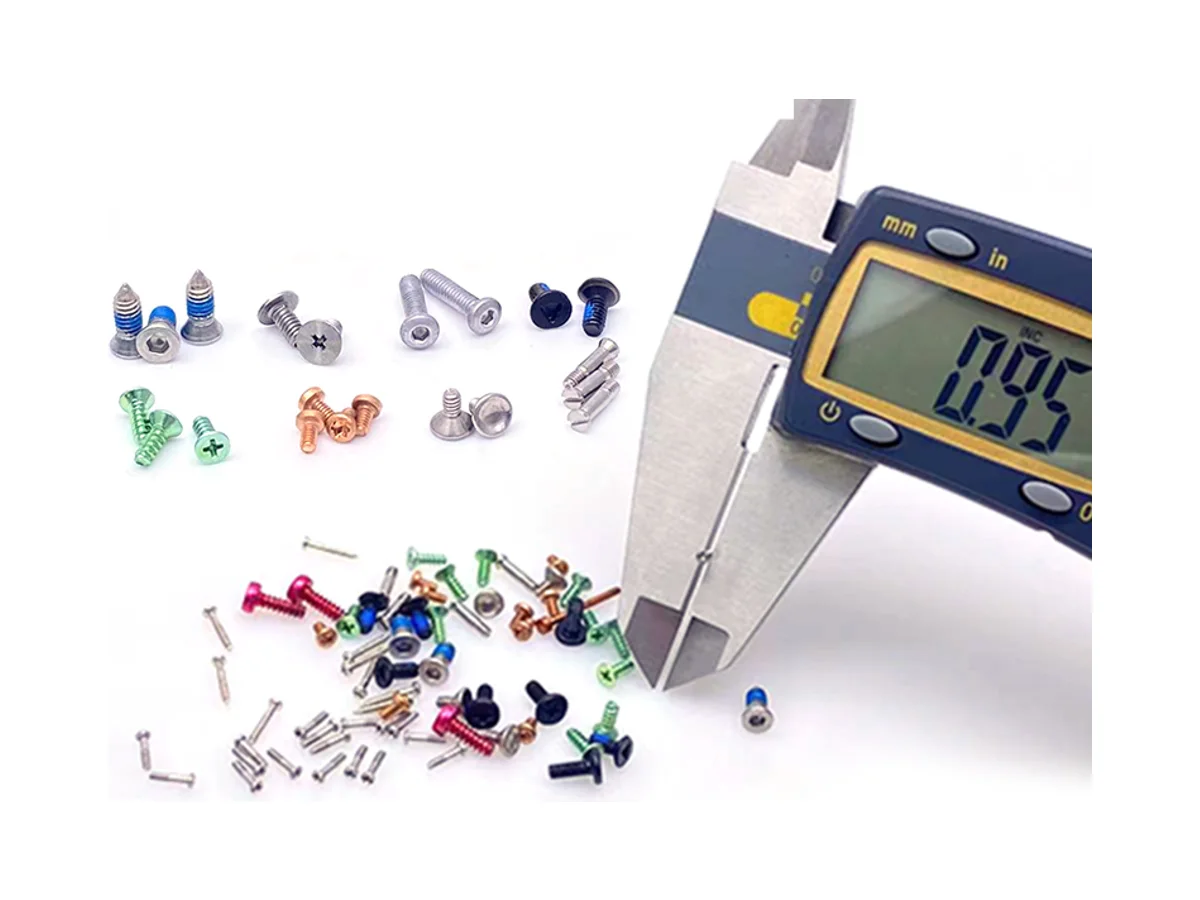
A wrong finish rarely fails on assembly day: white rust at the thread root after three months means insufficient corrosion protection; brittle fracture a week after installation means hydrogen embrittlement. Coatings change corrosion resistance, friction, conductivity and hydrogen risk at once — this page compares electroplating, zinc-aluminium flake coating and anodising.
Sub-pages
8 sub-pages grouped by topic — each card opens the next level.
Related entries
Quick entries beyond this topic across lines, tools and resources.
Three process routes
- Electroplating (zinc / Zn-Ni / nickel / tin): the most versatile route with good conductivity and low cost; trade-offs are hydrogen risk and wastewater treatment. Zn-Ni clearly outperforms plain zinc for coolant and outdoor duty.
- Zinc-aluminium flake coating (Dacromet type): dip and cure, virtually hydrogen-free with salt-spray life usually beyond electroplated zinc — first choice for 12.9+ high-strength and automotive parts; poor conductivity needs separate earthing design.
- Anodising: aluminium only, controllable colour and uniform appearance; the film grows on the substrate (size grows slightly), is hard-brittle, non-conductive and not alkali-resistant (GB/T 8013).
Match the finish to the duty
| Duty | Recommended route | Key point |
|---|---|---|
| Outdoor cabinets & charging equipment | Zn-Al flake / Zn-Ni | Use the same finish on structure and fasteners to avoid galvanic couples |
| Machine tools & coolant duty | Zn-Ni (common on insert screws) | If electroplating, 12.9 class must be baked to relieve hydrogen |
| Battery packs & HV connections | Zn-Al flake + masking, or Ni/Sn zones | Corrosion and conductivity conflict — zone one part instead of one universal coating |
| Cosmetic parts & consumer electronics | Anodising on Al; black oxide / Ni on steel | Batch colour variation and scratches dominate — control packing and assembly too |
Selection in five steps
- ① Substrate first: steel takes electroplating / Zn-Al flake / black oxide / phosphating; aluminium takes anodising / passivation — always ask the substrate before anything else.
- ② Strength decides the process: about 1000 MPa (HRC 32) is the hydrogen threshold; bake 190–220 °C after plating for 10.9+, prefer Zn-Al flake outright above 12.9.
- ③ Corrosion target from the duty: NSS (GB/T 10125 / ISO 9227) only ranks processes; confirm with cyclic corrosion, immersion or thermal cycling — hours without a method mean nothing.
- ④ Coatings change friction: re-verify the torque window with the real bolt + coating + lubrication + joint stack per GB/T 16823.3.
- ⑤ Handle earthing separately: Zn-Al flake and anodic films are poor conductors — use masking, conductive washers or Ni/Sn-plated parts at earth points.
What to write into acceptance
- Coating: thickness (GB/T 5267.1 / 5267.2), adhesion (bend or cross-cut), appearance (uniform colour, no blisters or bare spots); anodising per GB/T 8013 for film thickness and sealing.
- Performance: salt spray per GB/T 10125 / ISO 9227 with method and duration stated; hydrogen pre-load sampling per GB/T 3098.17 on high-strength parts; torque window from measured friction.
- Put every item into the technical agreement, not just a tick on the sample approval sheet.
Specs, MOQ and lead time
- Size range
- Precision fasteners: micro screws M0.6–M3, insert screws M1.4–M8, threaded inserts M2–M12 / 10-24 to 1/2-13, bolts, nuts and washers M2–M16
- Stock items
- Retained-stock SKUs ship from stock; see the stock page for the current list
- MOQ
- Small quantities for stock items; custom parts quoted per tooling and process
- Tiered pricing
- Three tiers: sampling / small batch / volume production
- Lead time
- Samples in 1 day for stock; volume 7–15 days; new tooling samples in 3–7 days
- Packing & OQC
- Packed to customer spec; shipment with inspection report (dimension / visual / salt spray / pull-out as required)
FAQ
Can salt-spray hours be converted to service life?
Why is Zn-Al flake preferred over plating for 12.9 bolts?
Does torque change after re-coating?
Need a spec check or 1-day sample?
Send us your drawing, spec or part code. We reply the same day on stock, MOQ, tiered pricing and lead time (1-day sampling for stock; volume 7–15 days).
Call directly: +86 135-1036-9429(Mr. Zhang (Engineering & Sales Director)) · +86 135-6073-0094(Ms. Fan (Sales Manager))